Skip to main content

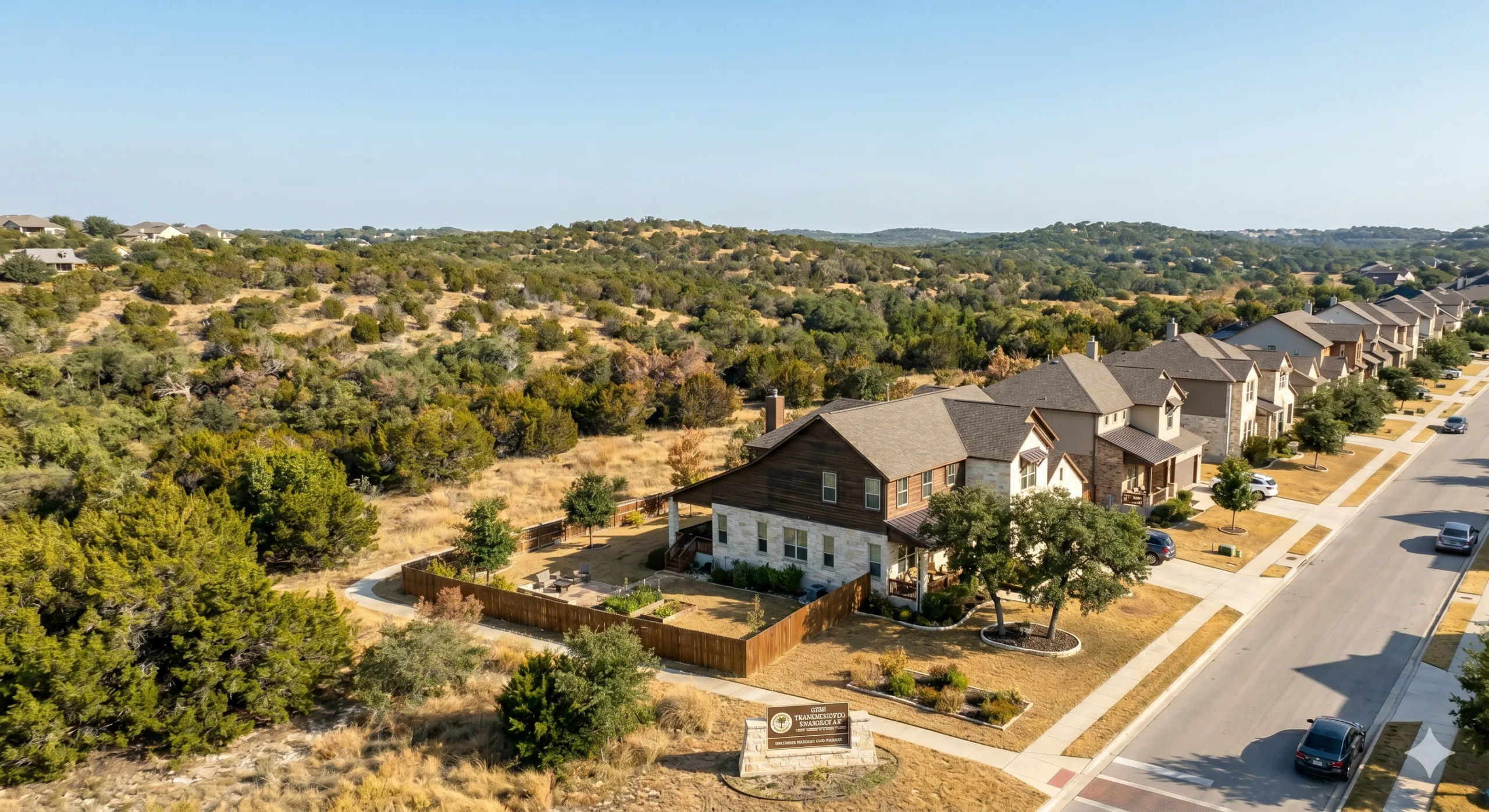
Wildfire preparedness is not a fringe issue in Austin anymore. It’s a local, seasonal, and increasingly urgent concern for HOA boards across the region. Austin ranks 5th nationally among major cities for wildfire vulnerability, and when a Travis County burn ban is active, that risk isn’t abstract. It’s the dry brush along the greenbelt edge behind your community’s fence line.
The biggest exposure in many communities isn’t only on individual lots. It’s at the neighborhood level: shared greenbelt borders, overgrown common areas, combustible fencing runs, and limited access roads that could bottleneck an evacuation. The City of Austin adopted an expanded Austin wildfire risk map in April 2025 that significantly increased the area classified as at-risk. But the map only shows boards where the risk is. This guide covers what to do about it: how to assess your community’s exposure, build a practical board action plan, and navigate the new Texas “brown grass” law that changes how boards handle landscaping enforcement during drought.
Why Wildfire Risk Is Now an HOA Issue in Austin
Austin’s wildfire risk is tied to where and how communities are built, especially where homes meet dense vegetation and where road access creates evacuation constraints.
This isn’t just about dry weather. Austin’s growth has pushed neighborhoods deeper into the wildland-urban interface, where greenbelt borders, steep slopes, and heavy brush create concentrated fuel loads within yards of residential structures. When a community has shared infrastructure, common areas maintained by the association, and coordinated resident communication, the board is already part of the wildfire conversation, whether or not it has formally addressed it.
The city’s April 2025 adoption of an expanded wildfire risk map brought this into sharper focus. Communities that previously sat outside the risk boundary now fall within it. And for neighborhoods with limited ingress and egress, wildfire isn’t just a property risk. It’s an evacuation and resident-safety constraint that boards need to treat as a serious operational concern.
Use the Austin Wildfire Risk Map as Your Starting Point
Boards don’t need to guess about wildfire exposure. The City of Austin provides an interactive austin wildfire map that shows risk levels down to the neighborhood level, giving boards a clear picture of where their community stands.
Three things your board can do this week with the map:
- Add the Austin Wildfire Hub link to your HOA website and reshare it seasonally through community email and your homeowner portal. Make the resource visible, not buried.
- Share defensible space and home ignition zone guidance so homeowners understand how to reduce risk near their own structures. The city’s wildfire resources include specific recommendations for vegetation management, gutter cleaning, and ember-resistant materials.
- Create a single “Wildfire Readiness” page on the community website with official links, emergency contacts, alert registration instructions, and clear expectations about what the HOA will and will not do during an incident.
This takes a morning, not a committee. And it puts your community ahead of the vast majority of Austin HOAs that haven’t addressed wildfire readiness at all.
The 2025 “Brown Grass” Law: What Austin HOA Boards Need to Know
House Bill 517, which took effect September 1, 2025, added Texas Property Code §202.008. The law prohibits HOAs from fining homeowners for brown or discolored vegetation during mandatory residential watering restrictions and for 60 days after restrictions are lifted.
For Austin-area boards, this law sits at the exact intersection of drought conditions, landscaping standards, and wildfire fuel management. When watering restrictions are in effect, boards cannot pressure residents to overwater to avoid appearance violations. The statute is clear: no fines for vegetation condition “before the 60th day after the date such residential watering restriction is lifted.”
The right approach is aligning landscaping standards with both water conservation requirements and wildfire fuel reduction. Four compliance steps will keep your board on the right side of the law while addressing fire risk:
- Pause or revise violation letters and fine policies tied to “green lawn” requirements during watering restrictions and throughout the 60-day post-restriction recovery window.
- Update landscape guidelines to emphasize drought-tolerant, firewise plant choices, especially along greenbelt edges and common-area perimeters where fuel loads matter most.
- Educate residents on the difference between water conservation (required during restrictions) and wildfire fuel reduction (clearing dead brush, trimming vegetation, maintaining defensible space around structures). These are related but distinct responsibilities.
- Coordinate with vendors so common-area mowing and clearing schedules reduce fuel without relying on heavy irrigation. Dry vegetation near structures is a fire risk whether or not it’s green.
No other content on the SERP connects HB 517 to wildfire preparedness. For boards in higher-risk zones, this connection is operationally critical.
What Austin HOA Boards Should Be Asking Right Now
Before building a wildfire plan, boards should run through a quick self-assessment to identify where their community is exposed and where current practices may be creating unintended risk.
Common Areas and Maintenance
Focus on the highest-risk edges of the neighborhood first. Is there heavy brush, tall grass, leaf litter, or unmanaged vegetation near homes in common areas? Are greenbelts, drainage easements, fence lines, and shared perimeters maintained in a way that actually reduces fuel, or just maintained for appearance? Do vendor scopes and mowing schedules reflect seasonal conditions and the specific edges where wildfire exposure is greatest? Common area maintenance isn’t just about curb appeal in at-risk communities. It’s about fuel management.
Built Environment and Standards
Review whether your community’s own standards are unintentionally increasing fire risk. Do landscaping requirements push residents toward heavy watering during restrictions, creating HB 517 compliance exposure? Do fencing standards allow long combustible runs (continuous wood fencing) that could carry fire between lots? Can the board educate homeowners on home-hardening basics like gutter cleaning, ember-resistant vents, and ignition-resistant materials near the home ignition zone, even if the HOA can’t mandate structural upgrades?
Evacuation and Communication
Test a simple question: if an evacuation alert went out tomorrow, would your residents know what to do? Would they know how alerts work, where to find verified instructions, and what steps to take first? If your neighborhood has limited ingress and egress, has the board treated that as a serious operational constraint or just a line item in a planning document? Boards should ensure residents are registered for Warn Central Texas, the official emergency alert system for the region.
A Practical Plan for Austin HOA Wildfire Preparedness
Boards don’t need to become wildfire experts. They need a repeatable readiness plan they can implement this season. Five steps will get your community to a stronger position than most neighborhoods in Austin.
Clarify Risk and Document Conditions
Start with the Austin wildfire risk map and then ground-truth it with a physical walkthrough. Identify high-risk edges: greenbelt borders, slopes, heavy vegetation zones, and areas where common-area brush meets residential structures or fence lines. Photograph and log problem areas with dates so vendor performance is measurable and progress is documented. A map tells you where risk exists. A walkthrough tells you what your community can do about it.
Reduce Fuel Sources in Common Areas
Tighten mowing and clearing standards where exposure is highest. Prioritize debris removal and vegetation management near structures, fence lines, and access routes. Confirm responsibility boundaries between the HOA, the city, and individual homeowners so nothing along the perimeter falls through the cracks. This is where vendor scopes matter. If the landscaping contract says “mow common areas” but doesn’t address fuel reduction along greenbelt edges, the highest-risk zones may not be getting the attention they need.
Build a Resident Communication Playbook
Put wildfire readiness resources in one place and keep them visible year-round, not just during active warnings. Your community website, email communications, and welcome packets should include: how to sign up for Warn Central Texas emergency alerts, where the City of Austin posts verified wildfire updates and preparedness guidance, what residents should do before risk spikes (defensible space landscaping, gutter cleaning, vegetation clearing, evacuation go-bags), and what the HOA will do during an incident and what falls outside the board’s role. Frame this as a communication system that gets updated seasonally, not a one-time email that gets buried.
Assign Roles Before an Incident
Name a board or manager point person for wildfire readiness before conditions escalate. Decide how the HOA will share verified information, how often updates will go out, and who has authority to make decisions about emergency vendor work or resident communications. The goal is to prevent the board from scrambling to figure out who does what while smoke is visible and residents are calling.
Engage in Community-Level Preparedness
When local agencies invite neighborhood input and participation, that’s a signal that wildfire planning isn’t only individual. The Firewise USA program provides a framework for community-level wildfire readiness that boards can adopt or adapt. Boards can help coordinate questions from residents, share city and county resources, and align the neighborhood around a simple, shared plan. Communities that participate in structured preparedness programs tend to be better informed, better organized, and less reactive when conditions change.
Frequently Asked Questions
How do I check my Austin neighborhood’s wildfire risk?
Use the Austin Wildfire Hub, which provides an interactive austin wildfire risk map showing risk levels down to the neighborhood level. The City of Austin adopted an expanded version of this map in April 2025, significantly increasing the area classified as at-risk. HOA boards should use the tool to assess community exposure, then ground-truth the results with a physical walkthrough of greenbelt edges, common areas, and access routes.
Can an Austin HOA fine homeowners for brown grass during a drought?
No. As of September 1, 2025, Texas Property Code §202.008 (added by HB 517) prohibits HOAs from fining homeowners for brown or discolored vegetation during mandatory residential watering restrictions and for 60 days after restrictions are lifted. Boards should pause or revise any violation policies tied to lawn appearance during drought conditions and update landscaping guidelines to emphasize drought-tolerant, firewise choices instead.
What should an HOA board do to prepare for wildfire season in Austin?
Start with three things: assess community exposure using the Austin wildfire risk map, reduce fuel sources in common areas (especially along greenbelt edges, fence lines, and near structures), and build a resident communication playbook with official alert systems, evacuation guidance, and clear HOA responsibility boundaries. Boards don’t need a 20-page plan. A clear, repeatable wildfire preparedness framework implemented before conditions spike is far more valuable than a detailed plan that only exists on paper.
Is there a Travis County burn ban in effect?
Burn ban status changes seasonally based on drought conditions and fire risk assessments. Travis County posts current burn ban status through the Travis County Office of Emergency Management. When a Travis County burn ban is active, it’s one more signal that wildfire risk is elevated and boards should be actively communicating preparedness resources to residents. Check the county’s official channels for the most current status.
Start Before the Next Warning, Not After
For a long time, wildfire may have felt like something that happened farther west or outside city limits. That’s no longer a safe assumption in Austin. If your community borders a greenbelt, sits in a higher-risk zone on the wildfire map, or has limited evacuation routes, the time to start building a readiness plan is now. Not after a warning goes out and not after residents are already anxious.
The goal is a community that’s better prepared, better informed, and less likely to make decisions under pressure. That means documenting conditions, reducing fuel in common areas, aligning landscaping standards with both drought law and fire risk, and giving residents a clear playbook before they need one.
This is the kind of operational work that compounds over time. At RISE Association Management Group, helping Austin communities turn wildfire risk into a structured, repeatable readiness plan is part of how we manage neighborhoods in at-risk areas. From common area assessments and vendor coordination to resident communication systems and compliance with Texas law like HB 517, the work isn’t a special project. It’s built into how we operate.