Skip to main content

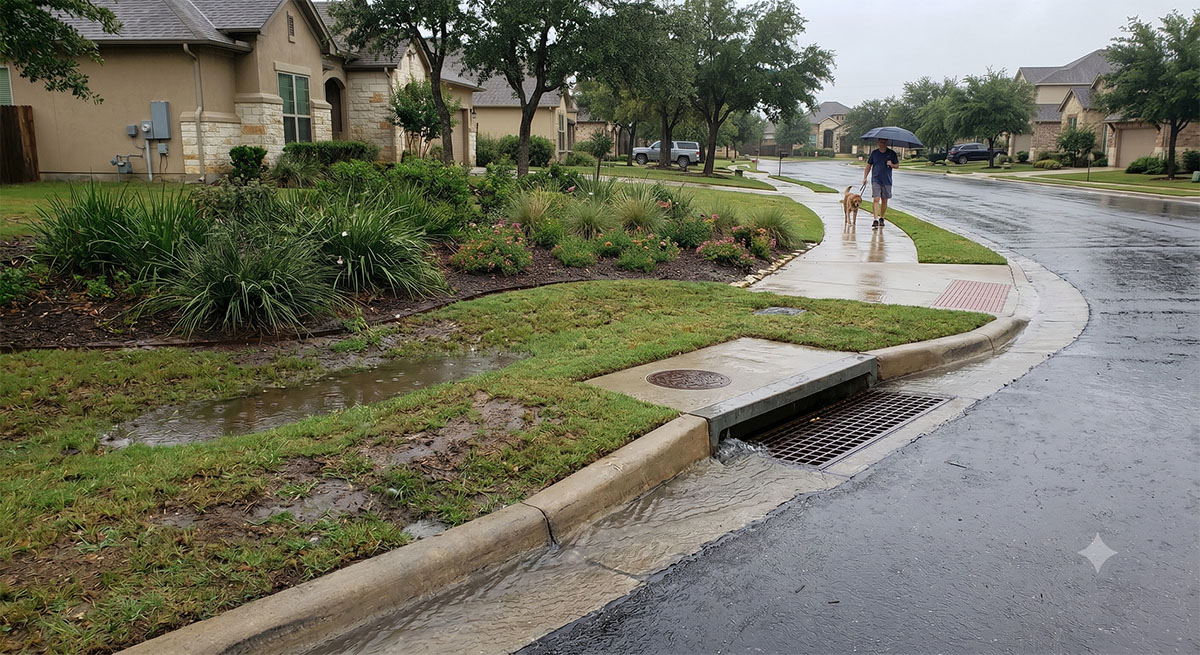
San Antonio doesn’t get rain gradually. A long dry stretch ends with one heavy storm, and suddenly everything that was hidden during the dry weeks is visible at once: clogged drains, ponding near walkways, washed-out landscaping, slick sidewalks, and a wave of resident emails about whose responsibility it all is. The boards that handle these events well aren’t reacting in real time. They have a repeatable post-rain walkthrough that catches problems early and tracks the spots that show up every storm.
This guide is a practical board-level checklist for San Antonio HOA maintenance after heavy rain: where to walk, what to inspect, how to document, when to call vendors, and what to tell residents. Use it after every significant storm and you stop fixing the same problems on repeat.
Quick-Reference Checklist
- Walk drainage paths and clear debris from inlets, curb drains, and swales
- Identify standing water near amenities, equipment pads, and shaded corners
- Check small containers (planters, dumpster slabs, playground bases) for mosquito-breeding water
- Inspect walkways, stairs, and parking areas for slick surfaces and trip hazards
- Confirm gates, lighting, and amenity equipment are operational
- Document repeat problem areas with dated photos and exact locations
- Contact vendors with scoped requests before backlogs build
- Send a short, clear post-rain update to residents
Drainage First: Track the Spots That Pond Every Time
In a San Antonio HOA, drainage is the first thing to inspect after heavy rain, and the spots that pond repeatedly are the ones that matter most. A one-time puddle after a major storm is different from the same low area holding water every time it rains. The repeat offenders are where the board should focus attention and vendor work.
Walk the full drainage path of your community and note conditions at each point.
- Storm drains and curb inlets: clear leaves, sediment, and debris that restrict flow. A partially clogged inlet behaves like a fully clogged one when rain is heavy.
- Swales, ditches, and drainage easements: look for debris dams, signs of erosion, and channels that are no longer carrying water the way they were designed to.
- Detention or retention areas (if applicable): check for unusual pooling, outlet blockages, and any erosion around inlets.
- Gutters and downspouts on HOA-maintained structures: confirm they’re intact and directing water away from foundations and walkways.
- Low spots near sidewalks, mailboxes, entries, playgrounds, and gates: note the depth and how long water sits. These are the locations that drive resident complaints fastest.
One important note for San Antonio communities: not every drainage problem is the HOA’s responsibility. Some infrastructure is maintained by the City of San Antonio, Bexar County, a utility provider, or a public drainage district. The board’s job isn’t to fix every issue. It’s to know where the problem is, who maintains it, and how residents should report it through the right channel.
Standing Water and Mosquito Prevention in Common Areas
Standing water after rain is more than an eyesore. It triggers mosquito breeding, odor complaints, turf damage, and a steady stream of resident emails about whether the HOA is going to do something about the puddles.
The standing water that matters most is often the kind residents don’t see. Obvious puddles in entry areas get reported and addressed. The water that creates the bigger problem is usually tucked into places nobody walks through during dry weather:
- Pool deck drains and equipment pads
- Playground bases, splash areas, and rubberized surfacing edges
- Dog park corners and compacted turf areas where soil no longer absorbs water
- Trash and dumpster enclosures, including containers, lids, and low-grade concrete slabs that hold water
- Empty planters, maintenance zones, and equipment storage areas
- Common-area gutters and roof drains on amenity buildings
Mosquitoes can begin breeding in standing water within a few days. A forgotten planter holding two inches of water in a shaded corner can produce a complaint cycle that lasts well past the rain itself. Adding these less-visible spots to every post-rain walkthrough reduces both the mosquito problem and the calls that follow it.
Safety, Erosion, and Landscaping Damage
Residents notice safety hazards and landscape damage fast after rain. A short walkthrough helps boards reduce liability exposure and catch erosion patterns before they become recurring repairs.
Safety priorities to check first:
- Sidewalks, stairs, and ramps: watch for slick algae growth, residual ponding, and any uplifted edges that have shifted with saturated soil
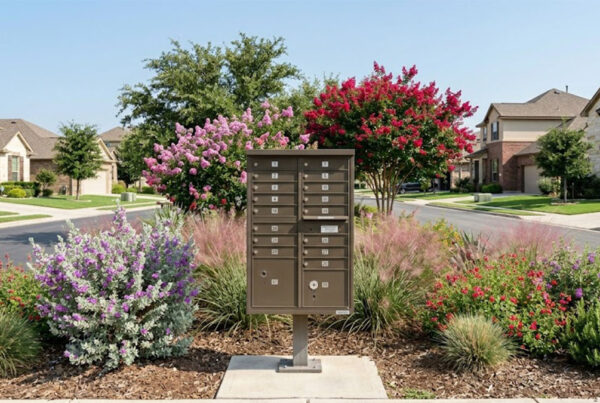
- Parking lots and entries: note pooling at pedestrian crossings and around mailbox kiosks
- Exterior lighting: wind and rain often cause outages or fixture damage that’s only visible after dark
- Gates and access control: check operator function, keypad responsiveness, and any water intrusion in electrical components
- Amenity areas: verify closure signage where needed and inspect equipment for damage before residents start using it
Then look at erosion and landscaping damage. Washed-out mulch and exposed roots near slopes, runoff channels cutting through beds or turf, soil movement around fence lines, monuments, and mailbox pads, and sediment deposits redirecting water toward buildings are all common after heavy San Antonio rain. Pause irrigation schedules after multiple wet days so the system isn’t overwatering already-saturated areas. If mulch washes out or turf dies in the same spot after every storm, the answer isn’t replacing it again. The answer is addressing the water path. That’s a drainage fix or a regrading decision, not a landscaping line item that resets each spring.
Document, Call Vendors, and Update Residents
The difference between a reactive board and an organized one is documentation, vendor timing, and a clear resident message. Boards that get these three right after every storm end up with fewer surprises, less rework, and shorter complaint windows.
Documentation: keep a simple running log for recurring trouble spots. For each issue, capture location, issue type, time observed, how long water sat, dated photos, and what action was taken. Over time this log separates one-off weather events from real patterns and gives vendors scoped, measurable work to bid on. “The swale near the back entrance has held water for more than 24 hours after the last three storms” produces a different vendor conversation than “we have a drainage problem.”
Vendor coordination: after widespread storms, vendor calendars fill within hours. Landscape, drainage, tree service, gate and access-control, and pool vendors should be contacted early with scoped requests, not vague “come look at everything” calls. Communities managed through RISE’s in-house facilities management work through this process on a defined timeline after every significant rain event, which is what keeps post-storm response from competing with every other community on the same vendor list.
Resident communication: send a short post-rain message covering what the HOA is inspecting and the timeframe, how to report common-area issues (photo and exact location is most useful), where to route concerns about public roads or utility infrastructure that fall outside HOA responsibility, a reminder to empty standing water from containers, planters, and yard items on their own lots (small amounts of water on private property are the most common mosquito source in any community), any temporary amenity closures, and a reminder to avoid flooded roads and follow official Bexar County and San Antonio safety alerts. Most resident complaints after a storm start because residents don’t know who’s doing what. A clear, brief message resets that.
Frequently Asked Questions
Is the HOA responsible for all drainage problems after heavy rain?
Not always. Some drainage infrastructure in San Antonio communities is maintained by the city, Bexar County, a utility provider, or a public drainage authority rather than the association. The board’s role is to identify where issues occur on HOA-maintained common areas, track recurring trouble spots, and direct residents to the right reporting channel for public infrastructure concerns.
How long can standing water sit before it becomes a mosquito problem?
Mosquitoes can begin breeding in standing water within a few days. After heavy rain, boards should check not just the obvious puddles but also small containers, planters, equipment pads, playground bases, and clogged gutters in common areas. These spots hold water long enough to create breeding conditions even when the volume looks minor. A quick walkthrough that includes the less-visible places is the most efficient way to prevent mosquito-driven resident complaints.
What areas in an HOA create the most resident complaints after rain?
The most common complaint triggers are repeated ponding near sidewalks and entries, mosquito-prone standing water in shaded or low-traffic areas, slick or unsafe walkways, washed-out landscaping at entries and visible slopes, and gate or access failures. Tracking these spots across multiple storms helps boards prioritize vendor work, scope the right repair, and reduce the chance of fixing the same problem twice.
Should the HOA pause irrigation after heavy rain?
Yes. Irrigation schedules should be adjusted or paused after multiple rain days to avoid overwatering, runoff, and wasted water. This is especially important in areas where drainage is already stressed or where erosion is recurring. Coordinate with the landscape vendor to confirm controller adjustments after any significant rain event.
The boards that get through San Antonio’s rain pattern well aren’t the ones with the biggest landscape budget. They’re the ones with a repeatable process.
Walk. Document. Correct. Track. That’s the post-rain rhythm built into how RISE manages communities across San Antonio, a market we’ve called home since the company’s earliest days. If your board is tired of fixing the same problems every spring, that’s a conversation worth having.