Skip to main content

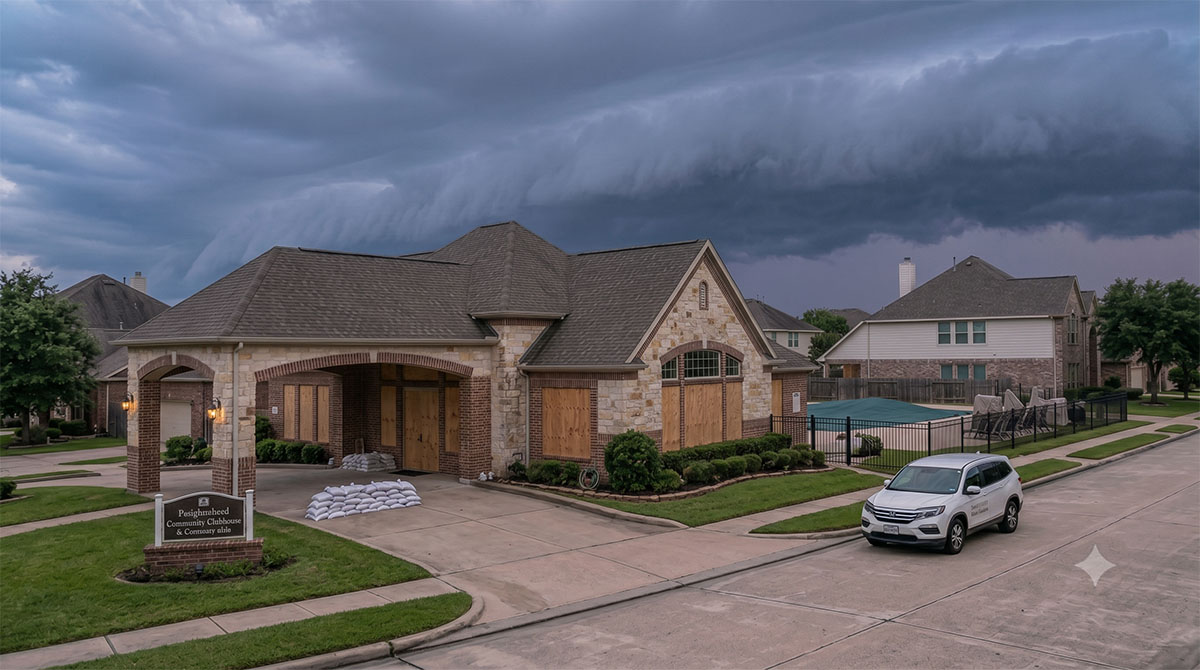
Houston storm season doesn’t announce itself with a named hurricane every time. Heavy rain, street flooding, power outages, and wind damage can disrupt communities with very little warning. When that happens, the board is responsible for drainage infrastructure, gates, rooftops, common-area lighting, vendor access, insurance documentation, and resident communication all at once.
Houston HOA storm preparation isn’t a one-day scramble before a forecast turns. It’s an operations plan that boards build in advance and revisit every season. This checklist covers the four areas that matter most: inspecting common areas and drainage, getting insurance documents and vendor contacts organized, documenting conditions and communicating to residents before the storm, and knowing what to do in the first 24 hours after it passes.
Storm-Season Checklist at a Glance
- Inspect drainage, detention areas, and common spaces; secure loose items and hazard trees
- Confirm emergency vendors and define after-hours authorization
- Organize insurance documents including hurricane and windstorm deductibles
- Photograph and date all common areas before the storm
- Send a clear pre-storm message to residents
- Run a prioritized inspection within the first 24 hours after the storm passes
Start With Drainage and Common Area Inspection
In Houston, drainage belongs at the top of your storm preparation checklist. Unlike coastal markets where wind is the primary hazard, Houston’s flat terrain and intense rainfall make water management the defining variable in how well a community weathers a storm. Blocked drains and low-lying common areas don’t just look bad. They create liability, accelerate property damage, and generate the resident complaints that land on the board’s plate.
Walk your common areas before storm season begins and log what you find. The specific items to check:
- Storm drains and inlets: clear debris and confirm water flows freely
- Detention and retention areas: look for blockages, erosion, and signs of ponding that point to drainage easement issues
- Gutters and downspouts on HOA-maintained buildings: confirm they’re intact and directing water away from foundations and walkways
- Low spots near sidewalks, fence lines, and entryways: sediment buildup in these areas diverts flow and creates standing water
- Pool deck drains: confirm they’re clear before heavy rain season starts
One critical Houston-specific distinction: some drainage infrastructure is maintained by the city, county, MUD, or another public entity, not the HOA. Harris County Flood Control District manages a significant portion of Greater Houston’s flood mitigation infrastructure. Boards need to know exactly which drainage features are association-maintained, identify the recurring trouble spots, and have a clear point of contact for issues that fall outside HOA responsibility.
While you’re walking the property, use the same inspection pass to address secondary hazards. Secure or store pool and amenity furniture, signage, trash enclosures, and anything else that becomes a projectile in high wind. Flag any trees near structures or power lines with visible deadwood or root concerns for your arborist to assess before peak season, not after a limb comes down. Confirm gate and access control equipment is operational, and document what your backup procedure is during a power outage so residents and staff aren’t figuring that out in real time.
Get Insurance Documents and Vendor Contacts Ready Now
Insurance claims are easier to manage when documents are organized before a storm, not while vendors and residents are calling at the same time. This is one of the areas where many boards find themselves behind when it matters most.
Build a storm-season insurance folder with these items confirmed and accessible to your manager and at least one board officer:
- Current declarations pages and policy summaries
- Deductible details, including any hurricane or windstorm deductible that applies separately from the standard deductible (this is a specific consideration for Houston’s coastal insurance market)
- Claim reporting instructions with carrier and agent contact information
- Key endorsements and exclusions so there are no surprises about what’s covered
- A plain-English summary of what the HOA master policy covers versus what homeowners are responsible for. This matters especially in condos and townhome communities where the coverage boundary between association and unit is less obvious.
Vendor coordination belongs in the same conversation. After any major storm, emergency restoration companies, tree services, roofers, and electricians are immediately overwhelmed. Boards that haven’t confirmed their vendors in advance lose days competing for contractors who are already committed elsewhere. Confirm your preferred emergency mitigation and restoration provider, tree service, roofing contractor, gate and access-control vendor, pool vendor, and licensed electrician before peak season. More importantly, define who can authorize urgent after-hours work and up to what dollar amount, so decisions aren’t made under pressure without the right approvals in place.
For communities managed through RISE, this is where the team’s insurance and risk expertise becomes tangible. RISE’s RiseShield Master Insurance Program, structured in partnership with Archer Risk Services, gives managed communities broader coverage, streamlined claims handling, and risk management support that generic broker referrals simply don’t offer.
Document Conditions and Communicate Before the Storm
Pre-storm documentation creates a clear record so you can distinguish new damage from pre-existing issues. A solid paper trail strengthens both vendor scopes and insurance conversations after the event.
Before a storm is forecast, your facilities team or community manager should walk the community with a camera and document dated photos and video of: roofs and gutters on HOA-maintained buildings, exterior walls and siding, fences and gates, amenity buildings and signage, monument entries, common-area lighting, drainage features, and visible tree conditions near structures. This takes an hour. It can save significant time and money in the claims and vendor process that follows a major weather event.
A short, clear pre-storm message to residents reduces confusion and prevents a flood of duplicate reports when the weather turns. That message should cover:
- How the HOA will send updates during and after the storm (app notification, email, HOA portal). Remind residents to confirm they’re receiving messages.
- Where to report common-area damage after the storm: submit a photo with location through the community portal or app. The RISE App makes this straightforward for communities on the platform.
- When to contact emergency services directly rather than the HOA
- Any amenity closures in effect before and during the storm
- Gate and access procedures if a power outage is anticipated
- A reminder that homeowner personal property, vehicle damage, and interior unit issues require the homeowner’s own insurance, not the HOA master policy
This last point prevents a recurring pain point: residents who assume the HOA policy covers their personal belongings and call the board expecting action. Clarifying it in advance, before the storm, saves time on the back end.
After the Storm: First 24 Hours
Preparation continues after the rain stops. A simple inspection workflow helps boards prioritize life-safety issues first and communicate clearly to residents about what was found and what comes next.
Work through your post-storm inspection in this order:
- Life-safety hazards first: downed power lines, unstable or toppled trees, flooding near electrical areas or equipment. These require immediate notification to utility providers and emergency services. Do not attempt removal or repairs without qualified contractors.
- Access and gate failures: confirm entrances are functional or document failures for your gate vendor. Notify residents of any access limitations.
- Standing water and drainage failures: note locations, take photos, and begin contacting your drainage vendor if standing water is significant or if storm drain failures are apparent.
- Visible roof and building damage: identify any active leaks on HOA-maintained structures and contact your roofing or mitigation vendor to begin documentation.
- Fallen limbs and fence damage: photograph and log. Determine whether damage is within HOA responsibility or adjacent to a neighbor, utility easement, or MUD-maintained area.
- Amenity damage and closure decisions (pool, gym, clubhouse): close amenities that pose safety risks and communicate closures to residents promptly.
- Resident report logging: as reports come in, log them by location and type. Avoid duplicating vendor calls for the same issue. Prioritize life-safety and access before cosmetic or deferred items.
Communicate a brief update to residents once the initial inspection is complete, even if it’s just “we’ve completed our walkthrough, here’s what we found, here’s what comes next.” Residents who feel informed are significantly less likely to call the board directly or escalate concerns. For boards using RISE’s in-house facilities management, this inspection process is built into the post-storm workflow, not improvised after the fact.
Frequently Asked Questions
Is hurricane season the only time Houston HOAs need a storm plan?
No. A solid HOA hurricane preparedness plan applies beyond named storms. Houston regularly sees severe thunderstorms, heavy rainfall events, and wind events that can disrupt communities without a formal tropical weather system involved. A year-round storm readiness plan helps boards respond faster and more consistently whenever conditions deteriorate, whether it’s a June tropical storm or a February freeze event. Reviewing your drainage, vendor list, and insurance folder before hurricane season begins each year is a reasonable minimum, and many boards find value in reviewing it every quarter.
Is the HOA responsible for all drainage and flooding in the community?
Not always. In Greater Houston, some drainage infrastructure (retention ponds, detention basins, drainage easements, roadside channels) is maintained by the city, county, MUD, or Harris County Flood Control District rather than the association. The board’s job is to understand which areas fall within HOA responsibility, identify recurring trouble spots, and direct residents to the right reporting channel when an issue falls outside association boundaries. When in doubt, your community manager can help clarify jurisdiction and connect with the appropriate public entity.
What insurance documents should an HOA have ready before storm season?
At minimum, boards should have current declarations pages, deductible details including any hurricane or windstorm deductible that applies separately, claim reporting instructions with carrier and agent contacts, key endorsements and exclusions, and a plain-English overview of what the HOA master policy covers versus what homeowners are responsible for. Having this organized in one accessible folder (not buried in email or a shared drive only one person knows how to navigate) speeds up the insurance claims process significantly when a storm event occurs.
When should the board confirm emergency vendors?
Before peak storm season. After major storms, everyone calls the same vendors at the same time. Emergency restoration companies, tree services, roofers, and electricians book up within hours of a significant weather event. Boards should confirm emergency mitigation, tree service, roofing, gate and access-control, and electrical vendors before the season begins, and define in advance who can authorize urgent after-hours work and up to what spending limit. This avoids last-minute decision-making under pressure and ensures your community isn’t waiting in line behind communities that prepared earlier.
RISE manages communities across Greater Houston, and storm readiness is built into how we operate, not added on when a storm approaches.
From drainage inspections and vendor coordination to insurance documentation and resident communication, our in-house facilities team and RiseShield insurance program give Houston boards a preparation framework they can rely on every season. If your community is ready for management that treats storm prep as an operations standard, we’d welcome the conversation.