Skip to main content

It’s a question that surfaces at board meetings more often than most people expect: how much should we have in reserves? Someone pulls up the balance, reads a number, and the table goes quiet because nobody is sure whether it’s enough. The HOA reserves rule of thumb gives boards a starting benchmark, but the number alone doesn’t tell the full story.
This post breaks down what the rule of thumb actually means, how to calculate your community’s percent funded status, what Texas law does and doesn’t require, and the practical steps boards should take to build a long-range financial plan that protects the community’s future.
What Is an HOA Reserve Fund?
An HOA reserve fund is money set aside for major repairs and replacements of shared community assets. Think of it as the community’s savings account for capital expenditures that don’t occur on an annual basis but are predictable with proper planning.
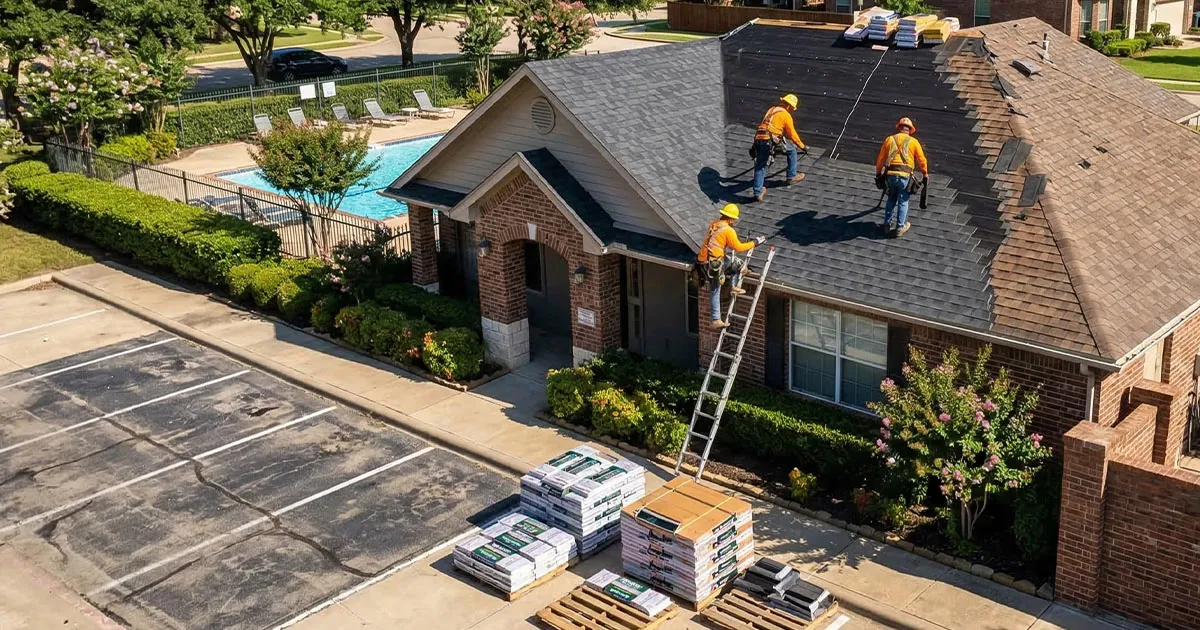
The reserve fund covers large-ticket items like roof replacements, road and parking lot resurfacing, elevator modernization, pool and clubhouse renovations, and building system overhauls. These projects carry significant price tags, and without a dedicated reserve fund, boards are left scrambling when the bill comes due.
The reserve fund is distinct from the operating fund, which covers day-to-day expenses like landscaping, utilities, insurance premiums, and management fees. Operating funds keep the community running month to month. Reserve funds keep the community’s infrastructure sound over decades.
The HOA Reserves Rule of Thumb: What Does 70% Funded Mean?
The most widely cited HOA reserves rule of thumb is to maintain reserves at 70–100% of the fully funded balance. The fully funded balance is the total amount that should be set aside at any given point in time based on the accumulated deterioration of all community assets.
Percent funded measures the ratio of what’s currently in the reserve account to what should be there, and it’s the single most important number boards need to understand when evaluating reserve health. The calculation is straightforward: divide the current reserve balance by the fully funded balance. If a reserve study indicates the community should have $500,000 set aside and the current balance is $350,000, the community is 70% funded.
Industry professionals and the National Reserve Study Standards generally recognize three ranges:
- Below 30% funded (At Risk): High probability of special assessments or deferred maintenance. Immediate action needed.
- 30–70% funded (Moderate): Gaps exist. The board should be working to increase reserve contributions and develop a catch-up plan.
- 70–100% funded (Strong): The community is positioned to handle projected replacements without emergency funding.
A second common benchmark is allocating 15–40% of total annual assessment income to reserves. The exact percentage depends on the community’s age, asset complexity, and the scope of upcoming projects. Newer communities with fewer shared amenities may fall on the lower end, while older properties with pools, elevators, and extensive common areas will need significantly more. Your reserve study’s funding plan should guide this number rather than a generic rule.
Why the Rule of Thumb Isn’t the Whole Story
While the 70% benchmark is a useful starting point, no single number applies to every community. Two associations can both be 70% funded and face completely different risk profiles based on asset age, community type, climate exposure, upcoming major projects, and local construction costs.
Texas’s hurricane-prone coastal markets, especially Greater Houston, introduce accelerated wear on roofs, pavement, and exterior finishes that can shorten component lifespans and inflate replacement costs well beyond national averages. A community sitting at 70% funded with a roof system nearing end-of-life in a hurricane-exposed market faces a very different reality than a 70%-funded community in a low-risk area with newer infrastructure.
Underfunded reserves don’t just create financial risk. They can also affect a community’s insurance coverage adequacy. In hurricane-exposed markets, reserve health and insurance readiness are directly linked. Communities without the financial capacity to repair storm damage promptly may face higher premiums, reduced coverage, or difficulty securing adequate policies. This is one reason RISE developed the RiseShield Master Insurance Program in partnership with Archer Risk Services: to help communities connect reserve planning with comprehensive risk management.
The bottom line is that the rule of thumb provides a snapshot. Boards need a current reserve study and a long-range financial plan to make confident decisions about their community’s future.
What Texas Law Says About HOA Reserves
Texas does not require HOAs or condominium associations to maintain a minimum reserve fund balance or conduct a reserve study. This is an important distinction that every Texas board member should understand.
Unlike states that mandate reserve studies or set minimum funding levels, Texas leaves reserve planning almost entirely to the board’s discretion and the community’s governing documents. The legal framework provides authority without imposing specific requirements:
- Condo associations (Chapter 82): The Texas Uniform Condominium Act authorizes condo boards to adopt and amend budgets for revenues, expenditures, and reserves under Section 82.102. Section 82.112 allows associations to accumulate reserve funds for anticipated expenses and restricts the use of reserves during declarant control. Section 82.157 requires disclosure of reserve amounts in resale certificates. But no minimum funding level is mandated.
- Non-condo HOAs (Chapters 202, 207, 209): Texas Property Code provisions governing property owners’ associations address operations, records, assessments, and compliance but are silent on reserve mandates entirely.
The absence of a state mandate makes proactive planning more important, not less. Without a law forcing action, reserve health becomes a fiduciary responsibility that boards must own. Governing documents (CC&Rs, bylaws) may include reserve study or funding requirements even if state law doesn’t, so boards should review their own documents carefully.
There’s also a practical market reality to consider. Fannie Mae and Freddie Mac require condo associations to allocate at least 10% of total annual budgeted assessment income toward reserves as a condition of project eligibility for conventional financing. When a community falls below that threshold, individual unit owners may have difficulty selling or refinancing, which directly affects property values across the entire association.
How to Evaluate Your Community’s Reserve Health
The most reliable way to evaluate reserve health is to commission a professional reserve study and use the results to calculate your community’s percent funded status. Here’s a practical framework boards can follow:
Step 1: Get a current reserve study. A professional reserve study includes an inventory of all major common elements (roofs, paving, mechanical systems, amenities), estimates of remaining useful life and replacement cost for each component, and a projected funding plan spanning 20–30 years. Industry best practice is to update the study every 3–5 years, or sooner if the community has undergone major repairs, added amenities, or sustained storm damage.
Step 2: Calculate percent funded. Use the formula covered earlier: current reserve balance ÷ fully funded balance = percent funded. Boards should know this number at the beginning of each fiscal year. If you’re below 70%, you have a gap to address.
Step 3: Review annual reserve contributions. Compare what the board is currently contributing to what the reserve study recommends. If there’s a gap between actual contributions and recommended contributions, the board needs to decide whether to increase assessments, adjust the project timeline, or accept the risk of future special assessments.
Step 4: Connect reserves to long-range financial planning. A reserve study is a starting point, but boards that treat it as a living financial roadmap rather than a one-time report are the ones that stay ahead. This is where a management partner with in-house financial capabilities makes a measurable difference. At RISE, annual long-range financial planning sessions go beyond the reserve study to build a complete financial picture, powered by in-house budget analysts using proprietary projection tools. Financial statements are delivered by the 15th of each month, so boards always have current data to inform their decisions.
What Happens When Reserves Are Underfunded
When reserves fall significantly below what a reserve study recommends, boards face a short list of options, and none of them are easy.
Underfunded reserves create a cascading set of consequences: special assessments that place unexpected financial burdens on homeowners, deferred maintenance that accelerates deterioration and inflates future costs, and complications with lender eligibility that can affect every owner’s ability to sell or refinance.
Special assessments are often the most visible consequence, and they create real tension between boards and homeowners. Asking residents to pay thousands of dollars for a project that could have been funded gradually through adequate reserve contributions erodes trust and creates governance friction that can take years to repair.
Deferred maintenance compounds the problem. When boards delay a $200,000 roof replacement because the reserves aren’t there, that project doesn’t get cheaper. It gets more expensive as damage spreads to underlying systems. Meanwhile, property values soften as buyers and their lenders scrutinize the association’s financial health during due diligence.
The most extreme example in recent memory is the 2021 Champlain Towers South collapse in Surfside, Florida. An independent budget review completed a year before the collapse found the association was funded at just 6.9% of its recommended reserve level, with multiple building components at zero remaining useful life. While the causes of that tragedy were complex, the case became a national wake-up call about what catastrophic underfunding and deferred maintenance can look like at their worst.
Proactive reserve planning prevents boards from ever facing those decisions. That’s why it’s a fiduciary responsibility, not just a financial best practice.
Frequently Asked Questions
How much should an HOA have in reserves?
Most reserve professionals recommend maintaining reserves at 70–100% of the fully funded balance. The exact dollar amount varies significantly by community size, asset type, and age. A small subdivision might need $150,000–$400,000 in reserves, while a high-rise condo with elevators and parking garages could need $2–5 million or more. The only way to determine the right number for your community is through a professional reserve study tailored to your specific assets and projected replacement costs.
What percentage of HOA dues should go to reserves?
Most professionals recommend allocating 15–40% of total annual assessment income to reserves. The exact percentage depends on the community’s age, asset condition, upcoming major projects, and current funding level. A newer community with few shared amenities may fall on the lower end; an older property with pools, elevators, and extensive common areas will need more. Your reserve study’s funding plan should guide this number, not a generic benchmark.
Does Texas require HOAs to have a reserve fund?
No. Texas law does not require HOAs or condo associations to maintain a minimum reserve balance or conduct a reserve study. Texas Property Code Chapter 82 allows condo associations to budget for reserves and requires disclosure of reserve amounts in resale certificates, but no minimum funding level is set. Boards should check their governing documents (CC&Rs, bylaws), which may include reserve requirements even when state law doesn’t. Proactive reserve planning is widely considered part of a board’s fiduciary responsibility regardless of whether the state mandates it.
How often should an HOA update its reserve study?
Industry best practice is to update a reserve study every 3–5 years. More frequent updates may be warranted if the community has undergone significant changes such as major repairs, new amenities, or unexpected damage from storms or other events. Between full studies, some boards opt for a financial-only update that refreshes cost estimates and adjusts for inflation without requiring a new site inspection.
Build a Reserve Plan That Keeps Your Community Ahead
The HOA reserves rule of thumb gives boards a useful benchmark, but a percentage alone doesn’t protect your community. You need a current reserve study, a clear understanding of your percent funded status, and a long-range financial plan that turns data into decisions. In Texas, where the state doesn’t mandate reserves, proactive planning is your board’s most important financial responsibility.
See what disciplined financial planning looks like for your community.
Request a Management Quote and let’s build a reserve strategy that keeps your board ahead, not behind.