Skip to main content

Every board that oversees a community pool knows the pattern. Vendors need startup confirmations, key fobs need distributing, signage needs verifying, and residents start asking questions weeks before the water is warm enough to swim. Community pool management creates one of the most concentrated coordination windows of the board year, and the moving pieces all converge at once.
A pool can look ready and still create problems if vendor scope isn’t documented, key fobs and access codes aren’t distributed and tested, or posted rules don’t match what residents were told. Most of these issues aren’t caused by anyone dropping the ball. They happen because pool season involves multiple vendors, systems, and communication channels that all need to connect on the same timeline.
This guide covers what boards should have on their radar before the first busy weekend so the season starts with confidence instead of a scramble. The focus here is coordination and oversight. For a detailed breakdown of pool rules and enforcement policies, see 7 Essential HOA Pool Rules for a Safe, Happy Community.
What “Pool-Ready” Actually Means at the Board Level
Community pool management readiness means operations, access, and resident expectations are all aligned before the season opens. That alignment requires coordination across vendors, your management company, and the board itself.
A smooth opening comes down to three things connecting on the same timeline: operations, access, and communication. On the operations side, vendor startup scope, service cadence, and after-hours response plans need to be confirmed and documented rather than assumed. For access, key fobs and entry codes need to work, replacements need to be ready for distribution, and residents need clear instructions before the gates open. And on the communication side, rules, hours, and guest policies need to reach residents early enough that opening day feels organized rather than chaotic.
When these three areas are coordinated in sequence, the season starts cleanly. The most effective approach is to treat pool season preparation as a short project with a defined timeline. Starting two to four weeks before your planned opening gives enough runway for vendor scheduling, inspections, access preparation, and at least one clear resident communication before the first busy weekend.
The Preseason Pool Maintenance Checklist Boards Actually Need
Before pool season begins, the pool area should be reviewed through a resident experience lens, focusing on what residents will notice first and what could become a safety concern once the area is busy. This is the board-level pool maintenance checklist: the oversight framework that confirms nothing was missed during seasonal startup.
A thorough preseason review follows a priority sequence based on safety impact and resident experience. Work through the area in this order:
- Entry points first. Gates should self-close and latch reliably every time. A gate that sticks, stays open, or requires a workaround is both a safety issue and an access control failure. Every entry point should be tested multiple times.
- Deck surfaces next. The full deck should be walked for cracks, uneven sections, and slick spots that become hazardous when wet. Areas where standing water collects or where surface texture has worn smooth should be flagged.
- Comfort and cleanliness layer last. Furniture condition, shade structures, trash capacity, restroom supplies, and general cleanliness. These items won’t create emergencies, but they shape how residents perceive the community’s stewardship of the space.
Findings should be categorized using a simple triage: must address before the season opens, address within the first two weeks, or monitor throughout the season. This prevents every finding from being treated as equally urgent and helps the board make informed decisions about where to allocate budget and attention. For communities considering larger repairs or renovations, understanding local requirements for HOA pool and common area upgrades is worth reviewing before scoping any capital work.
Pool Safety Checklist: Signage, Barriers, and Compliance
Pool safety depends on barriers, gates, posted rules, and emergency information working together as a system. No single sign or fence does the job alone.
Many pool safety guidelines emphasize self-closing, self-latching gates and barriers that restrict unsupervised access, while specific requirements vary by city and state. In Texas, the Department of State Health Services sets standards for public swimming pools and spas that boards should reference when evaluating their community’s pool compliance posture. Verify that required safety signage is posted, legible, and current, and that emergency contact information, pool rules, hours, and capacity limits are all visible from the pool area.
Consistency matters more than most boards realize. If a rule is posted at the pool, it should match the resident notice and the online posting exactly. When communications conflict, residents follow whichever version benefits them and dispute the rest. A preseason signage check should cross-reference every posted document against the official communication to catch discrepancies before residents do.
Vendor Coordination and Water Chemistry Oversight
Most pool-season disruptions trace back to coordination gaps, not water-quality failures. Before the season begins, startup scope, routine service responsibilities, and after-hours response plans should all be confirmed and documented, whether pool maintenance is handled by an outside vendor or by your management company’s in-house facilities team.
The service plan should spell out specific responsibilities, not just “pool maintenance” as a line item. At minimum, confirm coverage for:
- pH testing and adjustment on a defined schedule
- Sanitizer level management
- Total alkalinity and calcium hardness monitoring
- Filter maintenance and cleaning cadence
- Shock treatment and algae prevention protocols
- Service logs showing what was tested, what was adjusted, and when
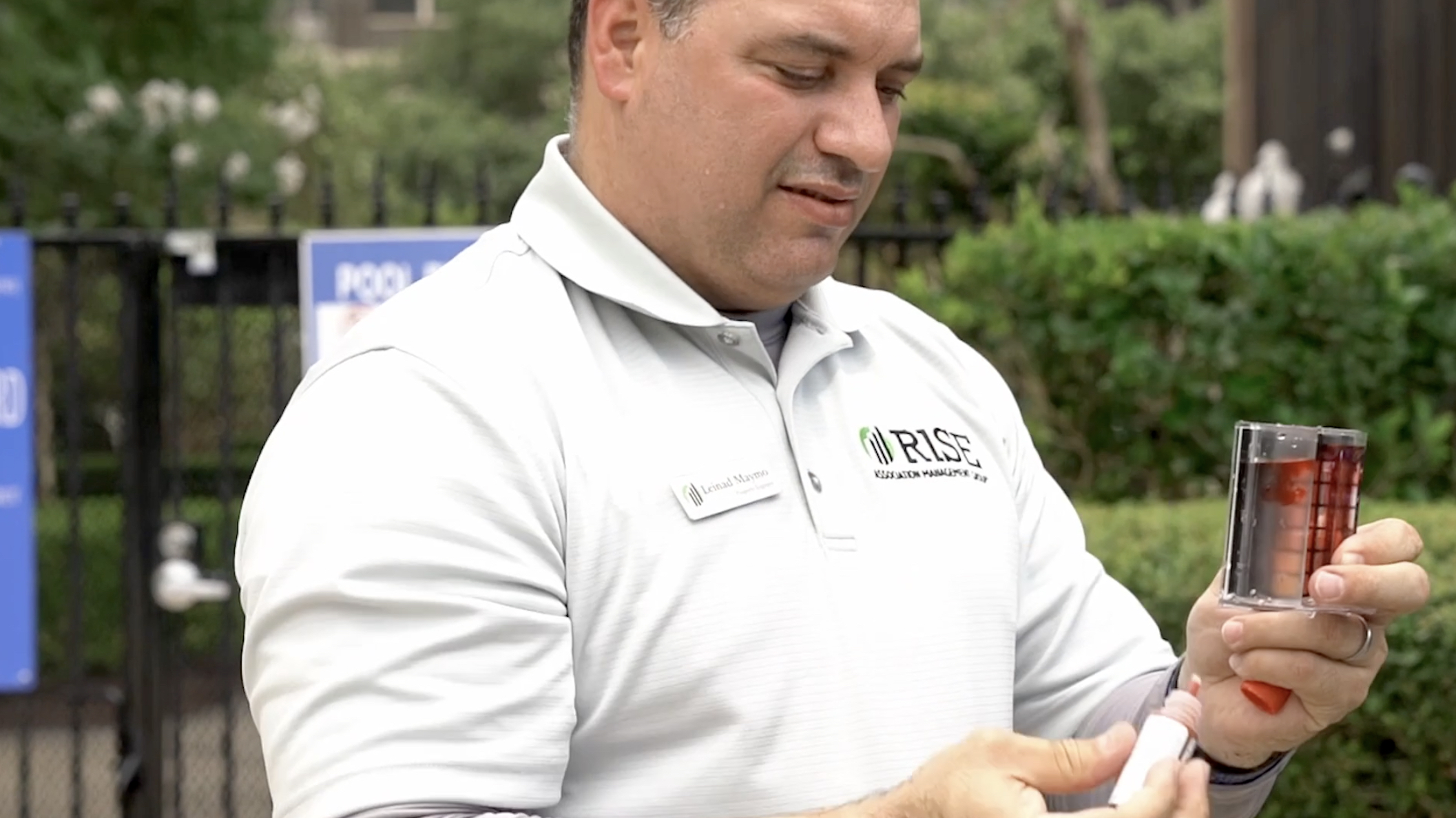
Water chemistry testing is the responsibility of whoever services the pool, whether that’s a contracted vendor or an in-house facilities team. Reviewing service documentation and following up on irregularities is typically the management company’s role. The board’s part in this chain is governance: understanding what’s being monitored, how it’s documented, and that accountability exists at each step. No one needs to become a pool technician, but confidence that testing is routine, documented, and responsive when weather or heavy usage causes swings makes a real difference in how the season plays out.
Before the season starts, also confirm that insurance documentation is current for any outside vendors and that an emergency contact exists for after-hours pool situations. Pool vendor coordination that clarifies scope, documentation, and response protocols before opening day prevents the mid-season “that’s not in our contract” conversations that consume board time.
Access Systems: The Fastest Way to Lose (or Earn) Resident Goodwill
Residents don’t experience “ready” until they can walk through the gate. Picture a family on the first hot Saturday of the season: kids in swimsuits, pool bag packed, floaties blown up, everyone ready to cool off. They tap their fob and nothing happens. That single moment shapes how they feel about the board’s management of the pool for the rest of the summer. Pool access systems that fail on opening weekend create outsized frustration even when every other detail is perfect.
Key fobs and entry codes should be tested, and replacements should be ready for distribution, before the first busy weekend. Different fob types and codes should be tried across every entry point to identify inactive fobs, gate alignment issues, or readers that are slow or inconsistent. Just as important is having a clear process ready for residents who need replacement fobs, new codes, or troubleshooting help once the season is underway.
If pool access depends on compliance requirements like registration forms, account standing, or signed waivers, those timelines need to be communicated well in advance. Residents who arrive on opening day only to learn they can’t enter because of an unfinished compliance step will direct their frustration at the board. Giving residents enough lead time to resolve access prerequisites before the season starts prevents that friction entirely.
Access is the single highest-friction touchpoint between your community and its pool amenity. Getting it right early is disproportionately impactful on how residents experience the entire season.
Resident Communication That Prevents Complaints
A single clear preseason message prevents most early-season confusion. It sets expectations, reduces repetitive questions directed at the board, and gives residents one place to reference rules, hours, and access guidance throughout the season.
One comprehensive communication before the pool opens, posted where residents can find it again later, does more to prevent complaints than almost any other preseason step. Post it to the community portal, email it to residents, and display it on the community bulletin board. Cover the essentials: opening date, hours of operation, guest policies, access instructions, and where to direct questions or report issues. If anything has changed from last year, call it out directly. Residents accept rules when they feel informed. They push back when they feel caught off guard.
Beyond the opening notice, a closure and reopen process should be in place before it’s needed. If the pool closes temporarily for weather, water chemistry, or a maintenance issue, residents should know where to check for updates and what to expect for reopening. Deciding in advance where incidents and recurring complaints are documented and who gets notified prevents the mid-season confusion that turns a single closure into a week of resident emails.
Consistent resident communication is what separates a season that feels managed from one that feels reactive. The Community Associations Institute reinforces the importance of clear rule communication and board authority in pool management, and their guidance aligns with what experienced boards already know: proactive messaging reduces enforcement headaches.
Frequently Asked Questions
When should an HOA start preparing for pool season?
Most communities benefit from starting two to four weeks before the planned opening date. That timeline allows room for vendor scheduling, a preseason pool inspection, key fob and entry code testing, fob distribution readiness, any needed repairs, and at least one clear resident communication before the first busy weekend. Starting earlier reduces the last-minute problems like delayed parts, missing signage, and gate issues discovered under load.
What should be included in a community pool management checklist?
At minimum, a thorough community pool management checklist includes a documented review of pool area condition, verification that safety barriers and signage are compliant and consistent, vendor scope and service cadence confirmed in writing, water chemistry testing and reporting protocols, access credential preparation and testing, updated rules and enforcement expectations, and a resident communication plan. Documenting each item creates accountability and gives next year’s board a starting point instead of a blank slate.
Does the HOA board need to monitor pool water chemistry?
The board doesn’t need to test the water themselves, but they should have confidence that routine testing is part of the vendor’s service plan and that results are documented after every visit. Most communities rely on a pool vendor to test and adjust pH, sanitizer levels, and alkalinity as part of regular service, especially during high-usage periods. The board’s role is governance: understanding what’s being monitored, confirming that testing happens on schedule, and knowing that someone is following up when readings fall outside acceptable ranges.
How can HOA boards reduce pool-related resident complaints?
Complaints drop when access works reliably, the area feels maintained, water quality is consistent, rules are clearly posted, and residents know where to find accurate information. Proactive communication and consistent vendor reporting reduce the surprise problems that generate the most frustration. One clear preseason message covering hours, rules, guest policies, and access instructions prevents the majority of early-season questions and gives the board something to reference when residents ask.
Start the Season With the Right Systems Behind It
Community pool management runs smoother when the right details are coordinated early: vendor scope documented in writing, safety and access verified before the gates open, key fobs ready for distribution, and residents informed through one consistent message. You’re the person residents look to when the pool isn’t ready or the rules feel unclear, and the right management partner makes that responsibility lighter by keeping the coordination organized so the board can focus on governance.
Ready to see what pool season looks like with operational precision behind it?
If your board wants a management partner who coordinates vendors, documents readiness, and prepares communication that reduces complaints before the season starts, request a management quote from RISE to see what the RISE Difference looks like for your community.